
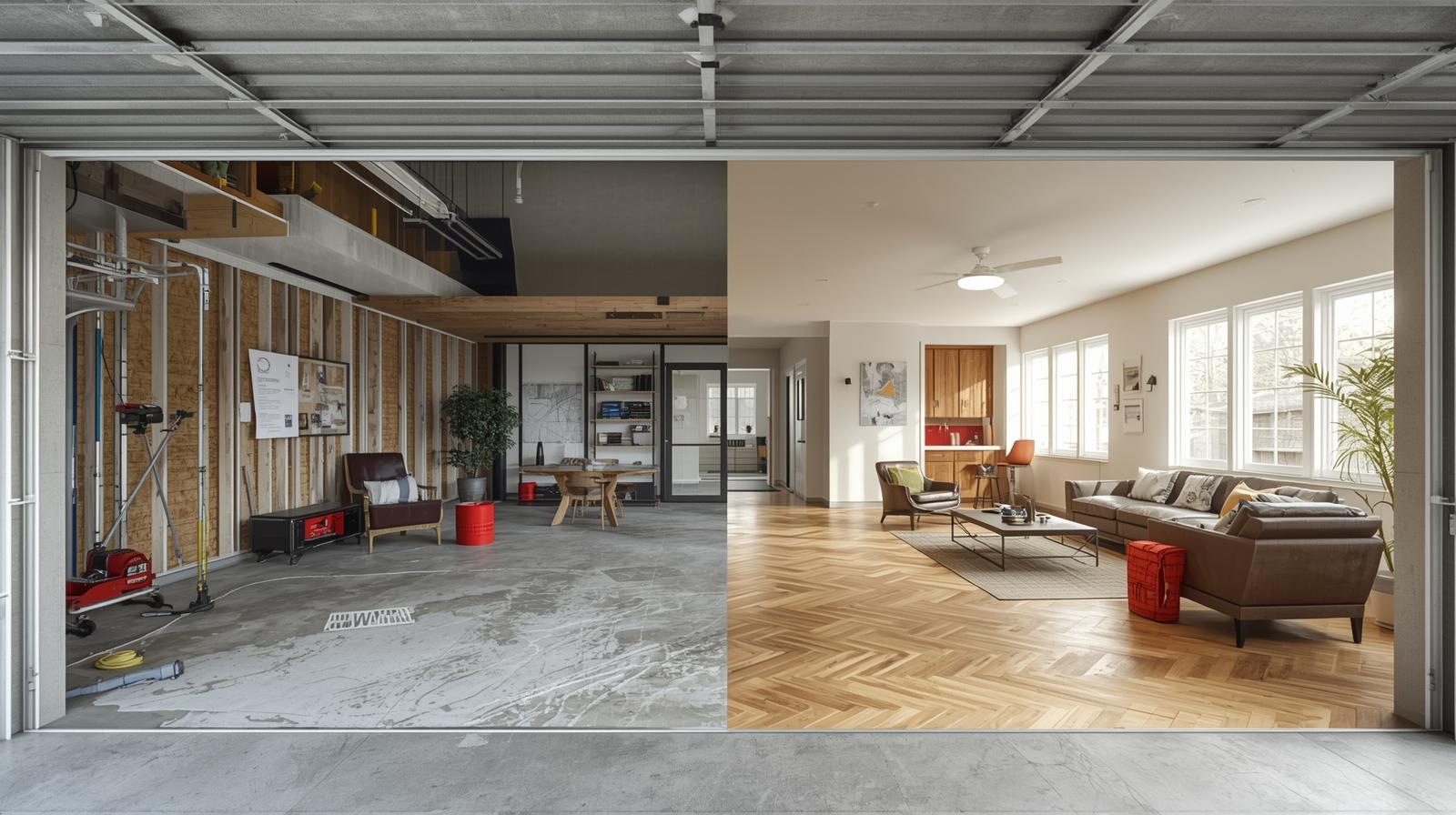
Turning your garage into a livable space has become one of the most practical home improvement projects for 2025. Whether you need an extra bedroom, home office, gym, or rental unit, converting a garage can add both comfort and property value. But before you dive in, it’s crucial to understand the real costs and permit rules involved.
1. Average Cost of a Garage Conversion
In 2025, the average cost to convert a garage ranges between $25,000 and $60,000, depending on size, design, and finishes. A basic conversion with minimal plumbing or structural work might cost less, while a full accessory dwelling unit (ADU) with a bathroom and kitchenette can exceed $80,000.
Cost Breakdown Example:
- Insulation & Drywall: $2,000 – $5,000
- Flooring & Finishes: $3,000 – $7,000
- Electrical & Lighting: $1,500 – $4,000
- Plumbing (if adding bathroom): $5,000 – $12,000
- Windows & Doors: $2,000 – $6,000
- HVAC installation: $3,000 – $6,000
- Labor & Permits: $8,000 – $15,000
2. Permit Requirements and Zoning Rules
Most cities require permits before starting a garage conversion. This ensures safety and compliance with building codes.
Key Permits You May Need:
- Building Permit – for structural and safety compliance
- Electrical Permit – for new circuits, outlets, or lighting
- Plumbing Permit – if adding sinks, showers, or toilets
- Zoning Approval – especially if converting to an ADU or rental unit
Always check local ordinances, as some municipalities restrict garage conversions that reduce off-street parking.
3. Common Cost Factors You Shouldn’t Overlook
Several hidden expenses can influence the total cost:
- Foundation Issues: Uneven or cracked floors may need leveling.
- Insulation and Ventilation: Old garages often lack proper thermal protection.
- Utility Upgrades: Adding plumbing or HVAC systems can increase project costs.
- Design and Layout: Custom layouts or luxury finishes raise expenses but improve value.
4. Return on Investment (ROI)
A well-planned garage conversion can yield an ROI of 60–80%, especially if it becomes a rental unit or functional living space. In high-demand areas, turning your garage into an ADU can generate steady monthly income.
5. Tips to Save on Your Garage Conversion
- Reuse existing walls, wiring, and flooring where possible.
- Go for energy-efficient insulation and lighting to save long-term costs.
- Hire licensed professionals familiar with local regulations.
- Request multiple quotes before choosing a contractor.
Final Thoughts
Garage conversions can be a smart investment when planned with accuracy and compliance. Before starting, ensure you have clear estimates, all required permits, and a design that fits both your budget and your lifestyle. Done right, it can transform unused space into one of the most valuable parts of your home.