
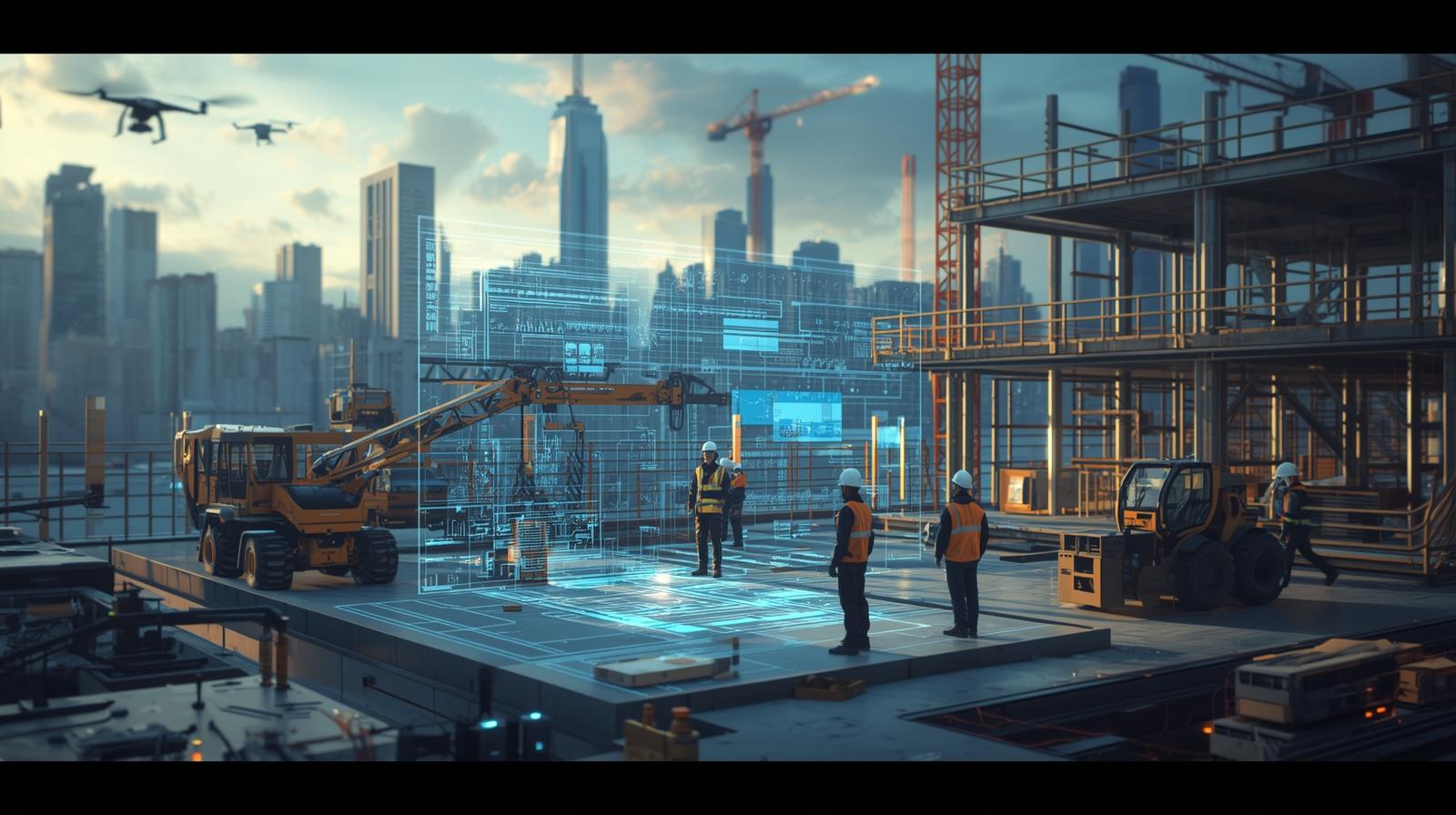
The construction industry is entering a new era of digital transformation — and at the heart of it lies artificial intelligence (AI). What began as a handful of smart tools for estimating and scheduling is now growing into a complete ecosystem of automation, robotics, and predictive intelligence. By 2030, AI won’t just assist construction professionals; it will lead many operational and decision-making processes.
This article explores the most significant predictions for how AI will redefine construction by 2030 — from smart design and labor automation to sustainability and safety innovations.
1. AI-Driven Project Management Will Become the New Standard
By 2030, AI-powered project management systems will oversee nearly every phase of a construction project. These platforms will use predictive analytics to anticipate risks, manage resources, and track performance in real time.
How it will work:
- AI will continuously analyze project data — costs, weather, labor hours, and supply chains — to predict delays or overruns before they occur.
- Project managers will receive automated alerts and recommendations to keep progress on schedule.
- Natural language assistants will handle documentation, progress reports, and communication between teams.
Impact:
This evolution means fewer manual inputs, reduced rework, and a major increase in overall productivity. Construction management will shift from reactive to proactively optimized workflows.
2. Robotics and Automation Will Handle On-Site Labor
Construction sites in 2030 will look very different from today. Expect robotic bricklayers, autonomous excavation vehicles, and AI-powered drones conducting real-time site monitoring.
Key predictions:
- Robotic crews will perform repetitive or hazardous tasks such as concrete pouring, welding, or material handling.
- AI drones will handle safety inspections and 3D mapping, sending live data to project dashboards.
- Collaborative robots (cobots) will work alongside human crews to increase accuracy and reduce fatigue-related errors.
Impact:
Labor efficiency could increase by up to 40%, and jobsite injuries may drop significantly. Rather than replacing workers, AI will augment them — allowing humans to focus on supervision, creativity, and decision-making.
3. Digital Twins Will Power Predictive Construction Planning
By 2030, digital twins — virtual replicas of real-world assets — will become a core part of construction workflows. AI will drive these models to simulate every possible scenario before ground is even broken.
Capabilities:
- Predicting the impact of design changes on cost and schedule.
- Simulating energy performance and sustainability outcomes.
- Monitoring structural health in real time after construction completion.
Example:
A high-rise building project will have a digital twin that receives live sensor data (temperature, vibration, humidity). AI will analyze this data to detect weaknesses, schedule maintenance, and optimize energy use — effectively allowing buildings to “think and self-maintain.”
Impact:
Digital twins will reduce design-phase errors and post-construction failures, leading to more predictable and sustainable infrastructure.
4. Generative Design Will Revolutionize Architecture
AI won’t just optimize what we build — it will also change how we design. Generative design systems use algorithms to create and test thousands of building layouts based on specified goals like cost, space, material efficiency, or sustainability.
By 2030:
- Architects will input requirements (budget, square footage, energy rating) and let AI produce the most optimized design.
- AI will instantly balance competing priorities — aesthetics, structural integrity, and compliance.
- These systems will drastically reduce the time between concept and final design.
Impact:
Generative design will replace the trial-and-error process of drafting and revision, allowing architects to focus more on creativity and innovation while ensuring designs are both functional and cost-effective.
5. AI in Estimating and Bidding Will Eliminate Guesswork
By 2030, AI-driven estimating tools will evolve beyond simple cost calculations. They’ll become predictive financial systems capable of forecasting total project outcomes with remarkable precision.
Capabilities:
- Analyzing global cost databases in real time.
- Predicting future price fluctuations for materials and labor.
- Automatically generating complete bid proposals based on project drawings and specifications.
Impact:
Estimating accuracy will reach levels previously impossible with manual input — allowing contractors to win more bids while protecting profit margins. AI will transform estimating into a strategic decision-making process rather than a routine calculation task.
6. Sustainability Will Be AI’s Core Mission
Climate responsibility is no longer optional, and by 2030, AI will be central to green construction strategies. Intelligent systems will analyze the environmental impact of materials, optimize energy use, and design for maximum efficiency.
Examples of AI sustainability integration:
- Recommending low-carbon materials and suppliers.
- Optimizing energy consumption in real time during construction.
- Forecasting lifecycle emissions for buildings.
Impact:
AI will make it easier for construction companies to comply with international sustainability standards (like LEED and BREEAM), while reducing overall operational costs through smarter material selection and logistics.
7. Predictive Safety Systems Will Save Lives
Safety is one of the biggest challenges in construction. AI will make sites smarter and safer by predicting risks before they happen.
By 2030, expect:
- Wearable sensors connected to AI platforms monitoring worker fatigue, posture, and location.
- Drones identifying unsafe areas or equipment issues in real time.
- Machine learning models detecting anomalies and triggering automated alerts.
Impact:
AI safety monitoring could reduce jobsite incidents by more than 50%, transforming safety management from reactive enforcement to proactive prevention.
8. AI Integration Across the Entire Construction Ecosystem
By 2030, AI will not be limited to isolated software tools. It will connect every aspect of construction through an integrated data network — from design and estimating to operations and maintenance.
What this means:
- Interconnected systems: Estimating tools, BIM models, project management platforms, and on-site sensors will share live data.
- Autonomous decision-making: AI will automatically adjust schedules, budgets, and logistics in response to real-time data changes.
- Lifecycle intelligence: From concept to demolition, AI will oversee the full lifespan of assets, ensuring efficiency and accountability.
Impact:
This complete integration will mark the true arrival of Construction 5.0 — a fully connected, intelligent, and adaptive industry ecosystem.
Final Thoughts: The Human-AI Partnership in 2030
While AI will handle most of the technical and analytical aspects of construction, human expertise will remain essential. The estimators, architects, and engineers of 2030 will not be replaced — they’ll be empowered.
AI will take care of calculations, risk analysis, and automation, allowing professionals to focus on creativity, ethics, and decision-making. The companies that invest in AI early will gain not only efficiency but also strategic insight — setting the foundation for smarter, safer, and more sustainable construction worldwide.
The future of construction isn’t just about building structures — it’s about building intelligence into every phase of creation.