
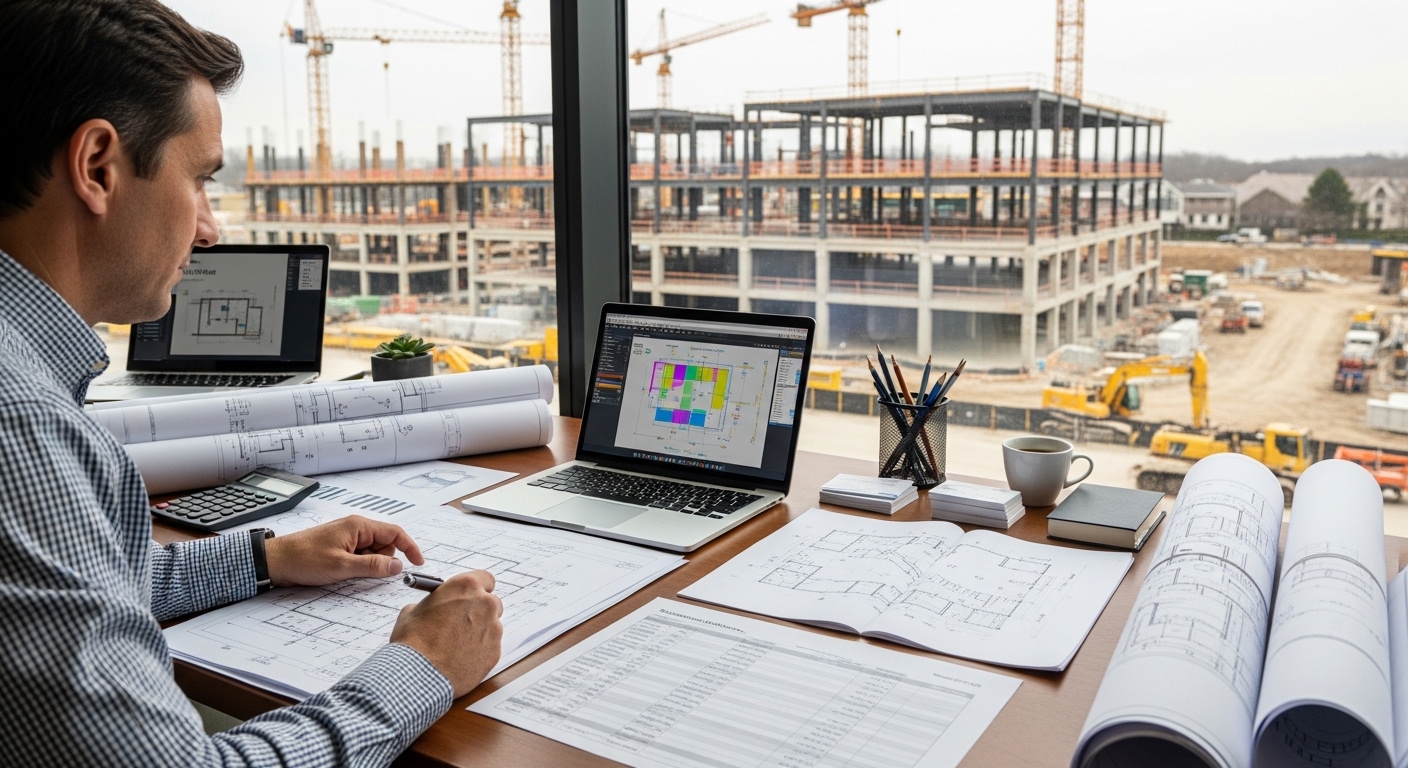
Construction bidding in the United States has become more competitive and data-driven than ever before. Rising material prices, labor shortages, regional cost fluctuations, and tighter profit margins mean that accurate construction bid estimates are no longer optional—they are essential.
As we move into 2026, contractors, subcontractors, developers, and construction companies must adapt their estimating practices to stay profitable while remaining competitive. This guide provides a comprehensive overview of construction bid estimating in 2026, covering methods, cost components, step-by-step processes, common mistakes, and best practices used across the U.S. construction industry.
Whether you are a general contractor, specialty trade contractor, or a construction estimator, this guide will help you prepare accurate, reliable, and winning construction bids.
What Is a Construction Bid Estimate?
A construction bid estimate is a detailed calculation of all costs required to complete a construction project, prepared for the purpose of submitting a bid to an owner or general contractor.
It typically includes:
- Material costs
- Labor costs
- Equipment expenses
- Subcontractor pricing
- Overhead and profit
- Contingencies and risk allowances
The goal is to submit a bid that is competitive, realistic, and profitable.
Why Construction Bid Estimating Matters in 2026
In 2026, estimating accuracy directly impacts:
- Profit margins
- Project success
- Client trust
- Business sustainability
Key Industry Challenges Affecting Bids in 2026
- Volatile material pricing (steel, concrete, lumber)
- Skilled labor shortages
- Higher insurance and compliance costs
- Regional cost differences across U.S. states
- Tighter timelines and penalty clauses
Accurate estimating helps contractors avoid underbidding, reduce disputes, and maintain profitability.
Types of Construction Bid Estimates
Understanding which estimate type to use is critical during bidding.
Common Construction Estimate Types
| Estimate Type | Description | When Used |
|---|---|---|
| Preliminary Estimate | Rough cost based on limited information | Early planning |
| Detailed Estimate | Line-by-line cost breakdown | Formal bidding |
| Unit Cost Estimate | Cost per unit (SF, LF, CY) | Repetitive work |
| Assembly Estimate | Grouped components estimate | Design-build projects |
| Subcontractor Estimate | Trade-specific pricing | GC bid preparation |
Key Components of a Construction Bid Estimate
A professional construction bid includes multiple cost categories.
1. Material Costs
Includes raw materials, finishes, and consumables.
Examples:
- Concrete
- Steel
- Lumber
- Drywall
- Roofing materials
- Electrical and plumbing materials
2. Labor Costs
Labor costs account for:
- Base wages
- Payroll taxes
- Overtime
- Union rates (if applicable)
- Productivity factors
3. Equipment Costs
Includes owned and rented equipment such as:
- Excavators
- Cranes
- Scaffolding
- Power tools
4. Subcontractor Costs
Pricing received from specialty trades:
- Electrical
- Plumbing
- HVAC
- Fire protection
5. Overhead & Profit
- Office expenses
- Insurance
- Licensing
- Desired profit margin
6. Contingency
Allows coverage for:
- Price fluctuations
- Design changes
- Unforeseen site conditions
Step-by-Step Construction Bid Estimating Process (2026)
Step 1: Review Project Documents
Carefully analyze:
- Drawings
- Specifications
- Addenda
- Scope of work
Missing scope items are one of the biggest causes of bid losses.
Step 2: Perform Quantity Takeoffs
A quantity takeoff is the backbone of an accurate estimate.
Typical Takeoff Items:
- Concrete volume (CY)
- Framing (LF, SF)
- Drywall (SF)
- Flooring (SF)
- Roofing (SQ)
Step 3: Apply Unit Costs
Unit costs should reflect current U.S. market pricing and regional differences.
| Cost Category | Example Unit | Typical Range (2026) |
|---|---|---|
| Concrete | $/CY | $155 – $210 |
| Framing | $/SF | $18 – $35 |
| Drywall | $/SF | $2.25 – $4.50 |
| Roofing | $/SQ | $450 – $900 |
(Ranges vary by region and project type.)
Step 4: Calculate Labor Hours
Labor productivity varies based on:
- Crew size
- Skill level
- Weather
- Project complexity
Accurate labor forecasting protects profit margins.
Step 5: Include Indirect Costs
Indirect costs often overlooked:
- Temporary utilities
- Site supervision
- Safety measures
- Permits and inspections
Step 6: Add Overhead, Profit & Contingency
| Cost Type | Typical Percentage |
|---|---|
| Overhead | 5% – 10% |
| Profit | 8% – 15% |
| Contingency | 3% – 7% |
Step 7: Final Review & Risk Assessment
Before submission:
- Double-check quantities
- Confirm subcontractor quotes
- Review exclusions and clarifications
Construction Bid Estimate Example (Simplified)
| Cost Category | Amount ($) |
|---|---|
| Materials | 325,000 |
| Labor | 260,000 |
| Equipment | 45,000 |
| Subcontractors | 190,000 |
| Overhead (7%) | 57,750 |
| Profit (10%) | 82,750 |
| Total Bid Price | 960,500 |
Common Construction Bid Estimating Mistakes to Avoid
- Underestimating labor productivity
- Ignoring regional cost differences
- Missing scope items
- Using outdated material prices
- Overlooking permits and inspections
- Bidding too low to “win at any cost”
These mistakes can erase profit or cause project failure.
Best Practices for Construction Bid Estimating in 2026
✔ Use updated cost databases
✔ Track historical project data
✔ Perform peer reviews before submission
✔ Maintain clear bid exclusions
✔ Adjust pricing for inflation and risk
✔ Use digital takeoff and estimating tools
Role of Technology in Construction Estimating (2026)
Modern estimating increasingly relies on:
- Cloud-based estimating software
- Digital takeoff tools
- Cost databases
- AI-assisted quantity analysis
Technology improves:
- Accuracy
- Speed
- Collaboration
- Consistency
Why Professional Construction Estimating Services Matter
Many contractors outsource estimating to:
- Reduce overhead
- Increase bid capacity
- Improve accuracy
- Focus on operations
Professional estimators deliver detailed, trade-specific, and market-accurate estimates aligned with U.S. standards.
Final Thoughts
Construction bid estimating in 2026 requires precision, experience, and adaptability. Accurate estimates protect profitability, strengthen client relationships, and improve long-term business success.
By following a structured estimating process, understanding market trends, and avoiding common mistakes, contractors can submit confident, competitive, and profitable construction bids in the evolving U.S. construction industry.