
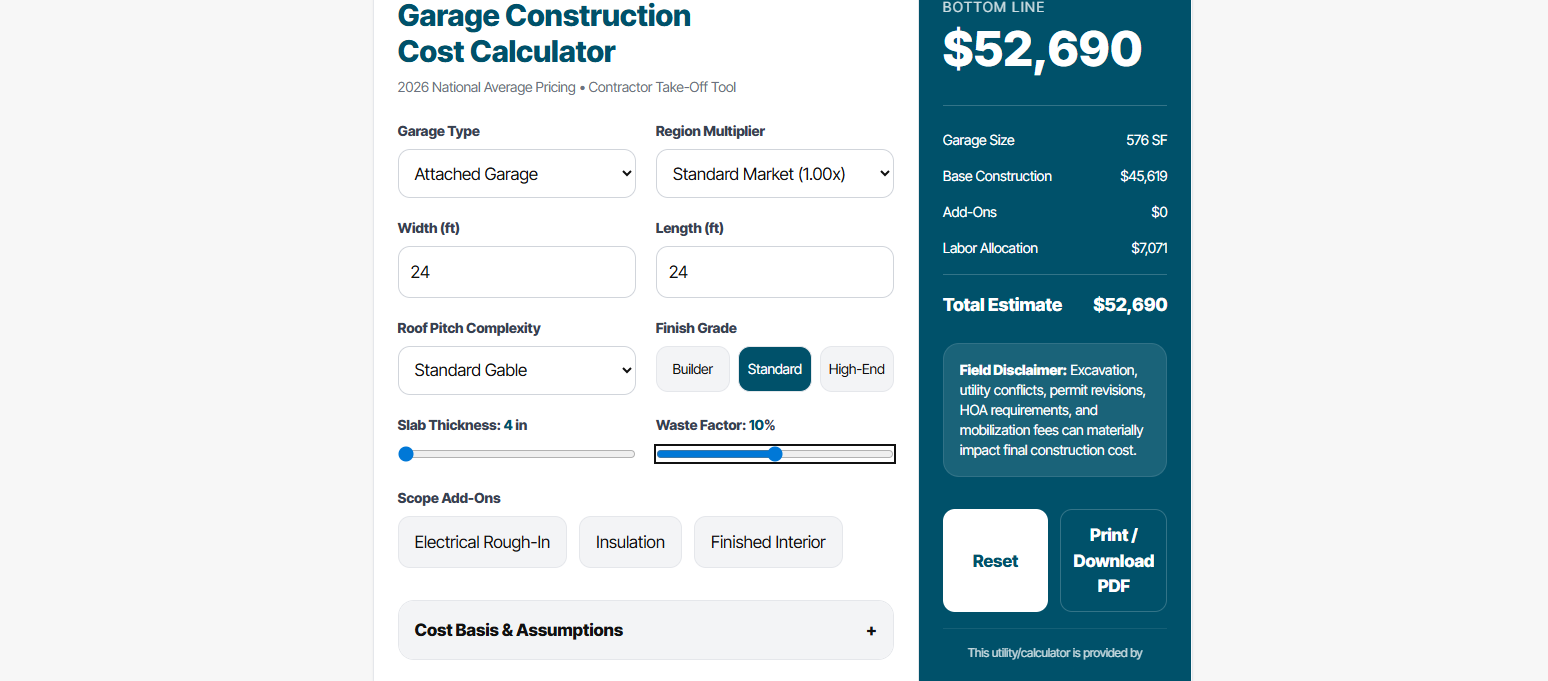
Garage pricing gets missed when the take-off stops at square footage. A detached 24×24 shell with basic framing is one number.
Add upgraded siding, electrical rough-in, thicker slab PSI, insulated overhead doors, or higher roof pitch and the line-item shifts fast. Labor burden, mobilization, excavation, and permit costs are usually where estimates drift.
In 2026, material volatility is still hitting framing packages, truss lead times, and concrete pricing market-to-market. Garage builds also move differently depending on whether you’re pricing a cold shell, workshop finish-out, or code-compliant conditioned space. Gauge, insulation package, roof framing complexity, and finish grade matter more than most homeowners realize.
This calculator uses national baseline assumptions with regional multipliers to pressure-test pricing before RFQs or subcontractor bids. Treat it like a bid-stage checkpoint—not a replacement for supplier quotes, permit review, or engineered plans.
Garage Construction Cost Calculator
2026 National Average Pricing • Contractor Take-Off Tool
Burdened Labor: $40.92/hr national average
Garage Shell: $58–$95/SF baseline
Detached Premium: +12%
Steep Roof Factor: +12–20%
Waste Factor: 5–15%
Bottom Line
The bottom line on garage pricing is scope creep hides inside allowances. One overhead door upgrade, thicker slab, premium siding package, or electrical expansion changes the number faster than most owners expect. Keep your take-off tight and separate shell cost from finish scope.
Before signing contracts, collect at least three bids for framing, concrete, and door packages. Material spreads in 2026 are still moving depending on market density, freight lanes, and labor availability.
Check local 2026 building codes before final pricing—especially setbacks, frost depth, slab reinforcement, fire separation, and wind-load requirements. A missed inspection correction costs more than tightening the estimate upfront.