
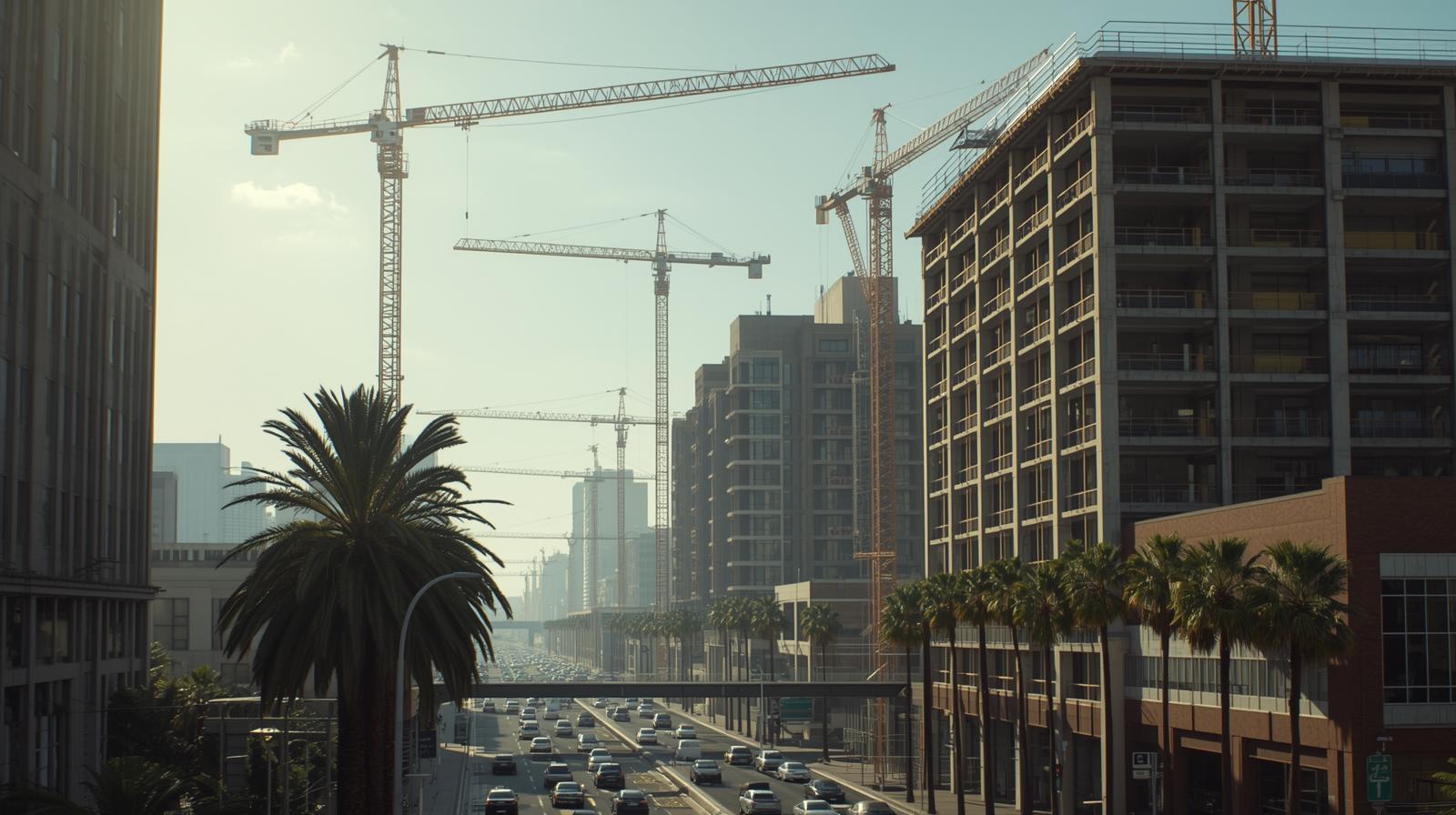
California’s skyline tells a story of innovation, ambition, and constant development. Yet, behind those impressive structures lies one undeniable truth — California has the highest construction costs in the United States. Whether it’s residential housing, commercial projects, or infrastructure, the state consistently ranks at the top for building expenses.
But what makes California so expensive to build in compared to other states? Let’s break down the major factors driving costs upward and what that means for developers, estimators, and contractors working in the Golden State.
1. Labor Shortages and Wage Inflation
One of the most pressing challenges in California’s construction industry is the shortage of skilled labor.
- The demand for experienced electricians, plumbers, and carpenters far exceeds the supply.
- This shortage drives wages higher, especially in urban centers like Los Angeles, San Francisco, and San Diego.
In 2025, average construction wages in California are 25–35% higher than in many other U.S. regions. With strict labor laws and overtime requirements, even mid-sized projects face significant workforce-related cost escalation.
2. Land Prices and Property Values
California’s real estate market is notoriously expensive. The cost of land alone can represent 40–60% of a project’s total development budget in certain cities.
- Limited space in high-demand areas forces builders to pay premium prices.
- Zoning restrictions further limit where new projects can be developed.
For estimators, these land costs make it difficult to produce competitive bids without cutting into profit margins or sacrificing material quality.
3. Stringent Environmental Regulations
California leads the nation in environmental and sustainability standards — a point of pride for the state but a cost factor for builders.
- Title 24 energy standards require advanced building systems for lighting, HVAC, and insulation.
- Green building mandates like LEED or CalGreen compliance add design and documentation costs.
- Waste disposal and emissions rules increase project complexity.
While these regulations promote long-term efficiency and sustainability, the upfront cost burden remains high for builders and developers.
4. High Material Costs and Supply Chain Issues
Material prices in California are inflated by both demand and logistics.
- The state imports large quantities of steel, lumber, and concrete, leading to higher transportation expenses.
- Ports such as Los Angeles and Oakland have faced repeated bottlenecks, slowing supply chains.
- Eco-friendly material requirements often force contractors to source from specific (and more expensive) suppliers.
Even though material inflation has cooled since the pandemic, regional supply constraints keep costs above the national average.
5. Complex Permitting and Bureaucracy
California’s construction permitting process is among the most time-consuming in the country.
- Projects can spend months — even years — navigating environmental reviews, local ordinances, and city approvals.
- Each delay adds cost due to extended financing, labor standby, and administrative overhead.
Compared to states like Texas or Arizona, where permits are streamlined, California’s process adds both time and uncertainty, making accurate estimating more difficult.
6. Energy and Utility Costs
Energy costs play a surprisingly large role in California’s construction pricing.
- High electricity and fuel prices affect both on-site operations and material production.
- Many regions also enforce strict energy codes requiring solar integration or energy-efficient systems.
While these mandates support the state’s renewable goals, they can increase project expenses by up to 10–15% for large-scale developments.
7. Urban Density and Logistical Challenges
Building in dense metropolitan areas creates logistical obstacles that drive costs higher.
- Limited space for equipment and material storage requires off-site staging and frequent deliveries.
- Traffic restrictions in downtown areas increase fuel and labor time.
- Noise, safety, and community regulations add to project management complexity.
Urban construction in San Francisco or Los Angeles often costs 50–60% more than similar builds in states like Nevada or Arizona.
8. Legal Risks and Insurance Premiums
California’s legal climate is another contributor to construction cost inflation.
- Strict liability laws increase the cost of insurance and risk management.
- Builders must carry extensive coverage for environmental damage, workplace safety, and design errors.
- Litigation risk adds a “hidden tax” that’s factored into every bid.
In some cases, general liability premiums in California are double those in neighboring states.
9. The Push Toward Sustainable Construction
Sustainability is more than a buzzword in California — it’s an expectation.
- Developers are encouraged (and sometimes required) to include renewable materials, low-carbon concrete, and advanced energy systems.
- These features improve long-term efficiency but come at a higher initial cost.
This focus on sustainability makes California a leader in green construction but also explains why building there remains so expensive.
10. How Builders Are Adapting
Despite the challenges, many construction firms are finding ways to manage costs:
- Digital estimating tools and AI-based project planning are helping teams identify cost efficiencies early.
- Prefab and modular construction methods are reducing waste and time on-site.
- Collaborative contracts (like Integrated Project Delivery) are aligning stakeholders to minimize rework and disputes.
These innovations are essential to maintaining profitability in one of the toughest construction markets in the country.
Final Thoughts
California’s construction costs reflect the state’s complex mix of economic strength, environmental leadership, and regulatory intensity. While the expense of building in the state can be daunting, it also pushes innovation — driving firms to adopt smarter technologies and sustainable strategies.
For estimators and developers, success in California depends on mastering not just cost analysis but also the intricate system of laws, logistics, and sustainability that defines the region’s construction landscape.