
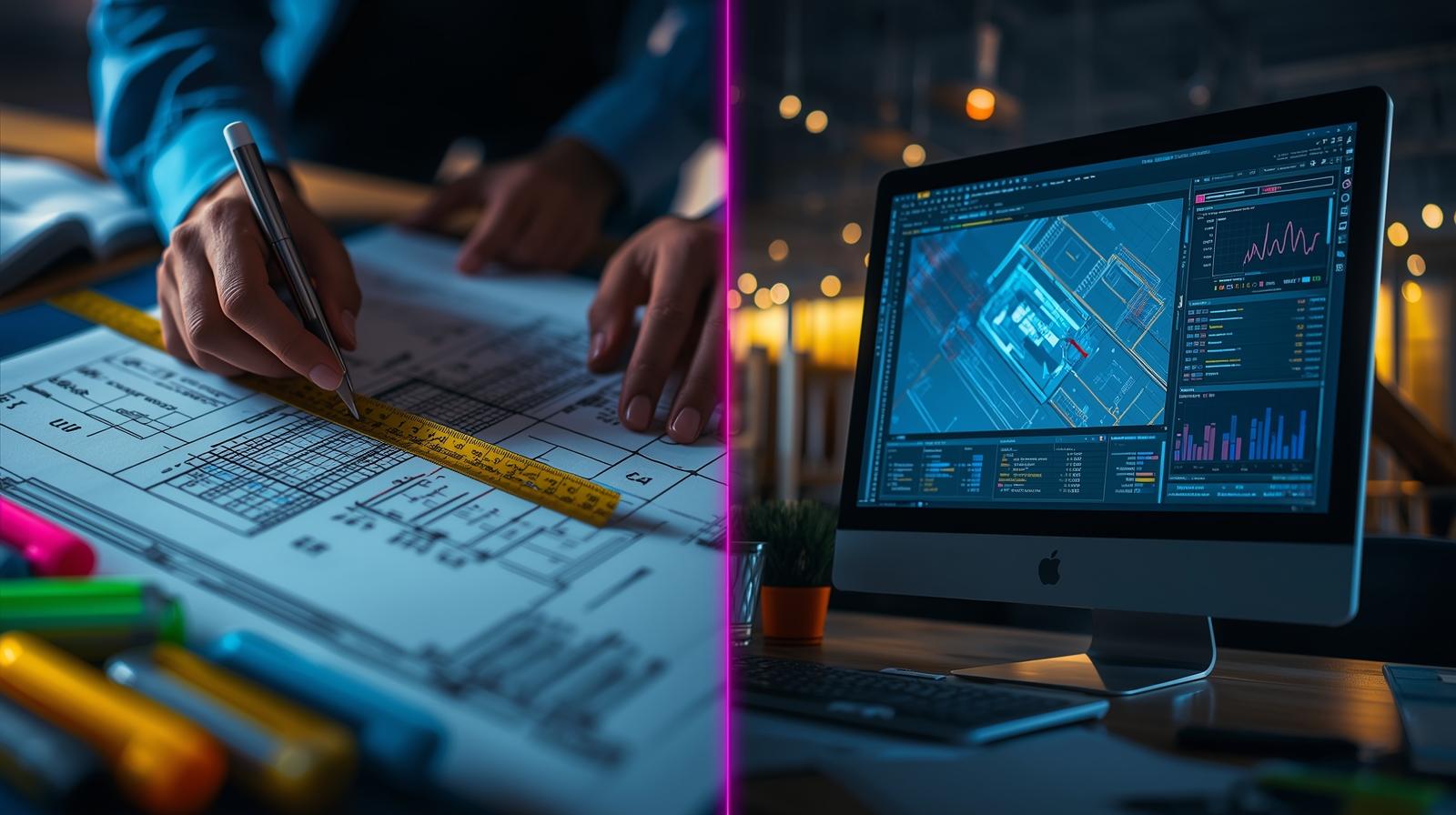
In construction estimating, takeoffs are the foundation of every project budget. Whether it’s calculating materials, labor, or overall costs, the accuracy of these measurements determines the success of a bid or proposal. For decades, estimators relied on manual takeoffs, measuring blueprints by hand using rulers, scales, and highlighters. But in recent years, digital takeoff software has transformed the process — offering automation, precision, and real-time collaboration.
This guide explores how both methods compare in terms of accuracy, time efficiency, and practical application in today’s construction environment.
1. What Are Manual Takeoffs?
Manual takeoffs involve physically reviewing printed drawings to measure quantities of materials. Estimators use tools such as scale rulers, markers, and spreadsheets to record data.
Advantages:
- Tangible review process — easier for those who prefer physical plans
- No software learning curve or digital setup required
- Complete control over every measurement step
Drawbacks:
- Time-consuming and prone to human error
- Difficult to revise or share with teams
- Repetitive work, especially for large or complex projects
Manual methods still exist in smaller firms or projects where digital adoption is limited. However, they struggle to keep up with modern project demands.
2. What Are Digital Takeoffs?
Digital takeoffs use specialized software to perform the same calculations on electronic drawings (PDFs, CAD files, or BIM models). Tools like Togal.AI, Bluebeam Revu, and eTakeoff automate area, length, and count recognition — dramatically reducing workload.
Advantages:
- Faster, more consistent measurements
- Easy plan revisions and instant quantity updates
- Integration with estimating and project management systems
- Cloud collaboration and data storage
- Reduced risk of calculation or transcription errors
Drawbacks:
- Requires initial software investment
- Learning curve for new users
- Dependence on digital plan quality and system compatibility
Despite these, digital takeoffs have become the industry standard due to their measurable improvements in accuracy and efficiency.
3. Accuracy Comparison: Manual vs. Digital
Accuracy in estimating directly impacts profitability. Even a small mistake in measurements can lead to material waste, budget overruns, or rejected bids.
| Factor | Manual Takeoffs | Digital Takeoffs |
|---|---|---|
| Measurement Precision | Dependent on estimator skill and scale interpretation | Software-calculated; consistent and automated |
| Error Risk | High (human error, misreading scales, or missing details) | Low (AI and OCR detect details and reduce omissions) |
| Plan Revisions | Requires starting over or heavy adjustments | Instant recalculations after uploading new plans |
| Data Transfer | Manual entry into spreadsheets | Automated export to cost databases or estimating platforms |
Digital systems, especially those using AI-powered recognition, outperform manual methods by automatically identifying quantities with near-zero variance. For example, Togal.AI can achieve up to 98% accuracy in blueprint area detection, compared to 85–90% with manual methods.
4. Time Comparison: Manual vs. Digital
Time is one of the most critical resources in construction estimating. Manual takeoffs often take hours or even days, especially when dealing with multi-level projects or detailed blueprints.
| Task Type | Manual Time (Average) | Digital Time (Average) |
|---|---|---|
| Residential project (single-level) | 3–4 hours | 45–60 minutes |
| Mid-size commercial project | 1–2 days | 2–4 hours |
| Large multi-story building | 3–5 days | 5–8 hours |
Digital tools accelerate workflows by automating repetitive tasks such as area calculations, item counts, and annotation management. Moreover, collaboration features let multiple estimators work on the same file simultaneously, cutting total project time by up to 70%.
5. Real-World Application and ROI
The real advantage of digital takeoffs comes from their return on investment (ROI). Though manual takeoffs have no upfront cost, the time lost and risk of inaccuracy often outweigh any savings.
Example:
A contractor using manual takeoffs may spend an average of 25 hours per project, compared to 8 hours digitally. Over a year of 100 projects, that’s a savings of 1,700+ hours, translating into significant cost and productivity gains.
Additional ROI factors:
- Fewer reworks due to better precision
- Improved bid turnaround time, increasing win rates
- Cloud data access, reducing communication delays
Digital takeoffs enable companies to bid on more projects, complete estimates faster, and maintain higher accuracy across all deliverables.
6. Hybrid Approach – When Manual Still Matters
While digital tools dominate, manual review still holds value in certain situations:
- Early design phases, where rough sketches are not yet digitized
- Field adjustments, where site-specific measurements are needed
- Cross-checking automated results for training or QA
Many experienced estimators combine both — using digital takeoffs for core calculations and manual validation for special cases. This hybrid approach ensures balance between technological efficiency and human expertise.
7. The Future of Takeoffs: AI Integration
In 2025 and beyond, the evolution of takeoff tools is moving toward AI and machine learning automation. Modern platforms now include:
- Automatic plan reading: AI detects all materials and assemblies on blueprints.
- Predictive analytics: Systems suggest quantities based on historical data.
- Voice-command interfaces: Estimators can ask questions like “Show me total drywall for Level 2” and get instant results.
These advancements not only enhance accuracy but also eliminate repetitive tasks, allowing professionals to focus on strategy, quality, and cost optimization.
Final Verdict: Digital Wins in Accuracy and Time
When comparing both methods head-to-head, digital takeoffs clearly outperform manual takeoffs in terms of speed, precision, collaboration, and adaptability.
- Accuracy: Digital tools reduce human error and standardize measurements.
- Time Efficiency: Automated takeoffs cut project preparation time by more than half.
- Data Integration: Seamless syncing with estimating software ensures consistent workflows.
While manual takeoffs still have niche uses, the construction industry’s shift toward digital platforms is irreversible. For modern estimators aiming to remain competitive, investing in digital or AI-powered takeoff solutions is no longer optional — it’s essential.