
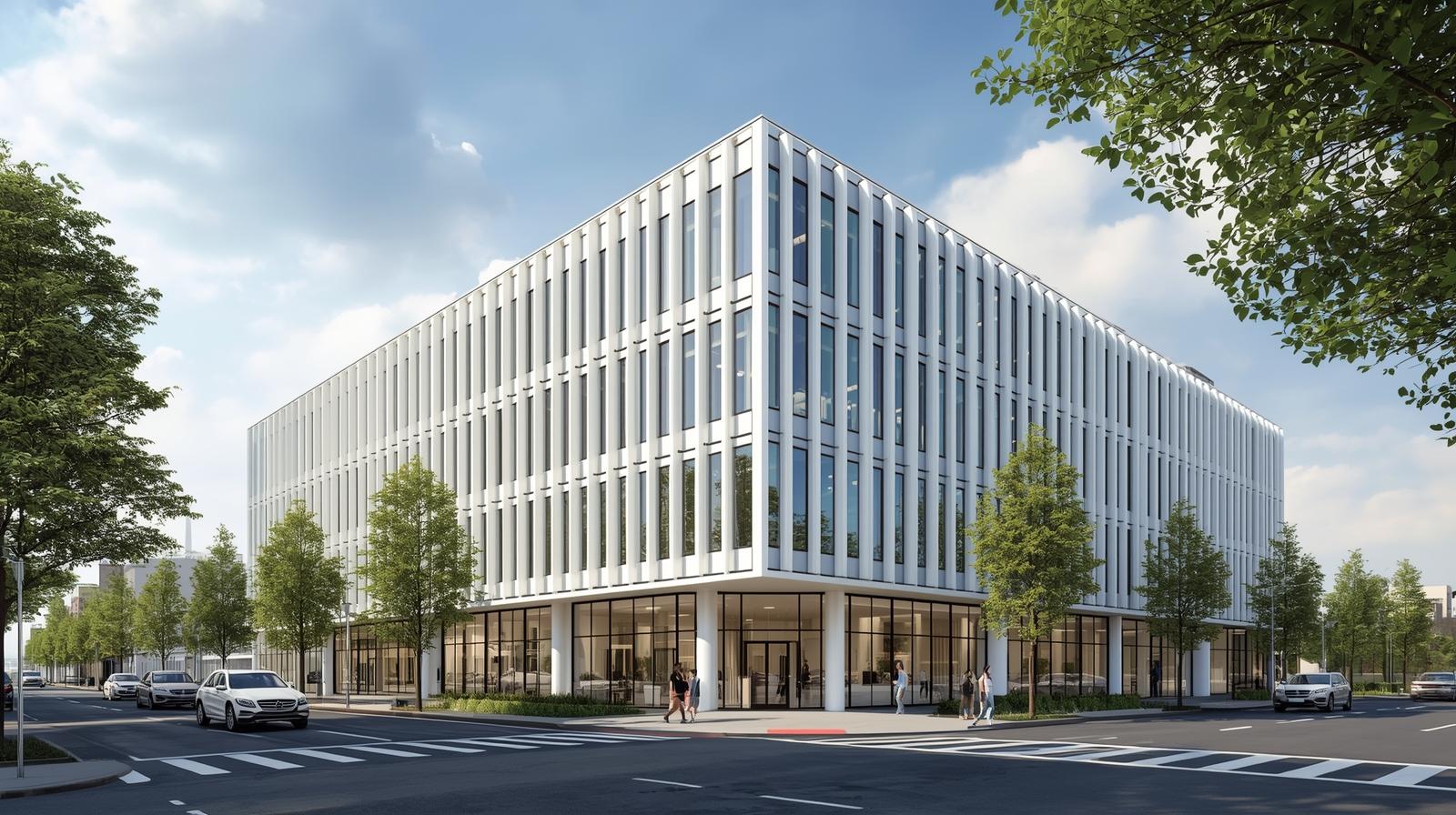
n today’s construction industry, sustainability has evolved from an optional feature into a defining benchmark of quality. Among all green certifications worldwide, LEED (Leadership in Energy and Environmental Design) stands as the most recognized and respected framework for environmentally responsible construction.
A LEED-certified building demonstrates excellence in energy performance, water conservation, indoor air quality, material selection, and overall sustainability. It represents not only environmental responsibility but also financial and operational intelligence.
This article explains what LEED certification means, its rating system, benefits, challenges, and why it’s considered the global standard for green building performance.
What Is LEED Certification?
LEED, developed by the U.S. Green Building Council (USGBC), is a globally recognized certification program for green buildings. It provides a comprehensive framework for designing, constructing, operating, and maintaining high-performance buildings that use resources efficiently and minimize environmental impact.
LEED applies to various building types, including:
- Residential and commercial buildings
- Schools, hospitals, and government facilities
- Warehouses and data centers
- Neighborhoods and cities
The program evaluates a project across multiple categories and awards certification based on its total sustainability score.
LEED Rating Levels and Scoring System
LEED certification operates on a point-based system. A building earns points for implementing specific green strategies across categories such as energy, water, materials, and indoor environment.
The total points determine the certification level:
| Certification Level | Points Range | Recognition |
|---|---|---|
| Certified | 40–49 points | Entry-level achievement |
| Silver | 50–59 points | Strong sustainability efforts |
| Gold | 60–79 points | High-level energy efficiency |
| Platinum | 80+ points | Exceptional performance and innovation |
The scoring system encourages builders and developers to go beyond compliance and pursue excellence in sustainability.
LEED Certification Categories
1. Sustainable Sites
This category encourages site development practices that minimize environmental disruption. It promotes preserving green spaces, improving stormwater management, and reducing the heat island effect through eco-friendly landscaping.
2. Water Efficiency
LEED-certified buildings are designed to reduce water consumption through technologies like low-flow fixtures, rainwater harvesting, and wastewater recycling systems.
3. Energy and Atmosphere
This section focuses on energy performance, renewable energy integration, and reducing greenhouse gas emissions. Advanced HVAC systems, insulation, and energy modeling are critical to earning high points here.
4. Materials and Resources
Points are awarded for using locally sourced, recycled, and sustainable materials. The goal is to minimize waste generation and encourage responsible sourcing.
5. Indoor Environmental Quality
This category ensures healthy indoor air through ventilation systems, pollutant control, and low-emission building materials, directly benefiting occupant well-being.
6. Innovation
Projects can earn additional points for implementing unique, measurable sustainability practices beyond standard LEED requirements.
7. Regional Priority
Extra credit is given for addressing local environmental challenges, such as drought resistance in the Southwest or energy efficiency in colder climates.
Benefits of LEED-Certified Buildings
1. Environmental Impact Reduction
LEED-certified buildings significantly lower energy consumption, greenhouse gas emissions, and water use. Studies show LEED buildings use 25% less energy and 11% less water on average compared to traditional structures.
2. Economic Efficiency
While the certification process can increase upfront costs, it delivers long-term savings through reduced utility bills, higher property value, and lower maintenance costs.
3. Healthier Indoor Environments
Improved air quality, lighting, and ventilation result in better occupant health and productivity, especially in office environments.
4. Enhanced Marketability
LEED certification boosts credibility with investors, tenants, and government bodies. Many corporations prefer leasing LEED-certified spaces to align with sustainability goals.
5. Compliance and Incentives
Many U.S. states and municipalities offer tax rebates, expedited permits, and grants for LEED-certified projects. This makes it not just environmentally wise but financially strategic.
The Certification Process
Achieving LEED certification typically involves the following steps:
- Registration – The project team registers with the U.S. Green Building Council and selects the appropriate LEED rating system (e.g., Building Design and Construction, Operations and Maintenance, Homes, etc.).
- Design and Planning – Sustainability strategies are incorporated into architectural and engineering plans.
- Documentation and Submission – Detailed records of materials, systems, and methods are submitted to USGBC for review.
- Review and Scoring – Independent reviewers assess the project and assign points based on compliance.
- Certification Award – The project receives one of the four LEED levels (Certified, Silver, Gold, or Platinum) based on total points earned.
Cost Implications of LEED Certification
The cost of achieving LEED certification depends on building size, design complexity, and the targeted certification level. Typically, LEED-certified buildings may have a 2–5% higher upfront cost than conventional construction, but this is offset by operational savings within 5–7 years.
In commercial settings, LEED certification often leads to higher rental rates, lower vacancy, and enhanced investor appeal. For public projects, it demonstrates accountability and long-term environmental stewardship.
Challenges and Misconceptions
1. Higher Initial Costs
While initial costs are slightly higher, long-term energy and maintenance savings outweigh the investment.
2. Complex Documentation
The certification process requires extensive reporting, calculations, and third-party verification, which may be challenging for small firms.
3. Performance Gaps
Some buildings may achieve certification but fail to maintain energy efficiency in operation. Continuous monitoring and facility management are essential.
4. Regional Adaptability
Climate variations can affect how LEED principles are applied. For example, insulation priorities differ between Arizona and Minnesota.
The Global Expansion of LEED
Although LEED originated in the United States, it has become an international benchmark for sustainable design. Over 180 countries have adopted LEED standards, and thousands of projects worldwide are now certified.
In the U.S., states like California, New York, and Massachusetts lead the adoption due to stringent environmental regulations and growing public demand for sustainable infrastructure.
The Future of LEED-Certified Buildings
The future of LEED is becoming more data-driven, with the introduction of LEED v5, which integrates carbon measurement, resilience metrics, and social equity considerations.
Technologies like AI-driven energy modeling, IoT-based smart building management, and net-zero integration are enhancing how LEED standards are implemented and monitored.
Ultimately, LEED-certified buildings are more than just eco-friendly—they are resilient, economically viable, and prepared for the future of construction.
Conclusion
LEED certification has transformed how we define building excellence. It’s no longer just about constructing structures—it’s about creating environments that serve people and the planet efficiently.
For developers, contractors, and property owners, LEED certification is more than a sustainability badge; it’s a symbol of quality, innovation, and long-term value. As global attention shifts toward environmental accountability, LEED-certified buildings remain the gold standard for responsible construction.
Last fact-checked and editorially reviewed on Nov 02, 2025 .
How we created & reviewed this content:
The content in this article has been gone through our editorial process and currently reliable.
DISCLAIMER
Profound Estimates besides its services, also provides independent, fact-checked information about construction estimates and material takeoffs for general reference only and images on this site maybe AI-Assisted where appropriate and relevant. See our Disclaimer for details.
INFORMATION SOURCES
Profound Estimates follows strict sourcing standards, relying only on credible, verifiable data from manufacturers, industry benchmarks, and reputable publications. Learn more about how we ensure content accuracy and transparency in our Editorial Policy.
- U.S. Green Building Council (USGBC) – LEED Certification Guide
- LEED v4 and v5 Reference Manuals
- Environmental Protection Agency (EPA) – Green Building Basics
- American Institute of Architects (AIA) – Sustainable Design Standards
- U.S. Department of Energy – Building Efficiency Reports
- International Living Future Institute – Sustainability Insights
- National Renewable Energy Laboratory (NREL) – Energy Efficiency Research
- Journal of Sustainable Architecture and Engineering
- ASHRAE – Advanced Energy Performance Guidelines
- Building Owners and Managers Association (BOMA) – Green Operations Study
- Construction Industry Institute (CII) – Green Construction Best Practices
- Smart Buildings Alliance – LEED in the Modern Era
EDITORIAL HISTORY
Our team of writers, editors, and reviewers continually monitors the mobile industry and updates articles when new information becomes available. See how we maintain transparency and editorial integrity in our Editorial Policy.
- Current version
- Edited by Anthony Brooks
- Nov 02, 2025
- Written by Jasmine Patel
- Edited by Anthony Brooks
- Editorially reviewed by Amanda Ruiz
DISCUSSION & FEEDBACK
We value reader insights and industry feedback to help us keep our content accurate and relevant. Learn how we handle reviews, corrections, and updates in our Editorial Policy.
- Leave a feedback on this post update at Reddit and Youtube.
CITE & SHARE IT
You’re welcome to cite and share profound estimates content for reference with proper attribution and a link back to the original article — helping more readers access trustworthy, well-researched construction information.