
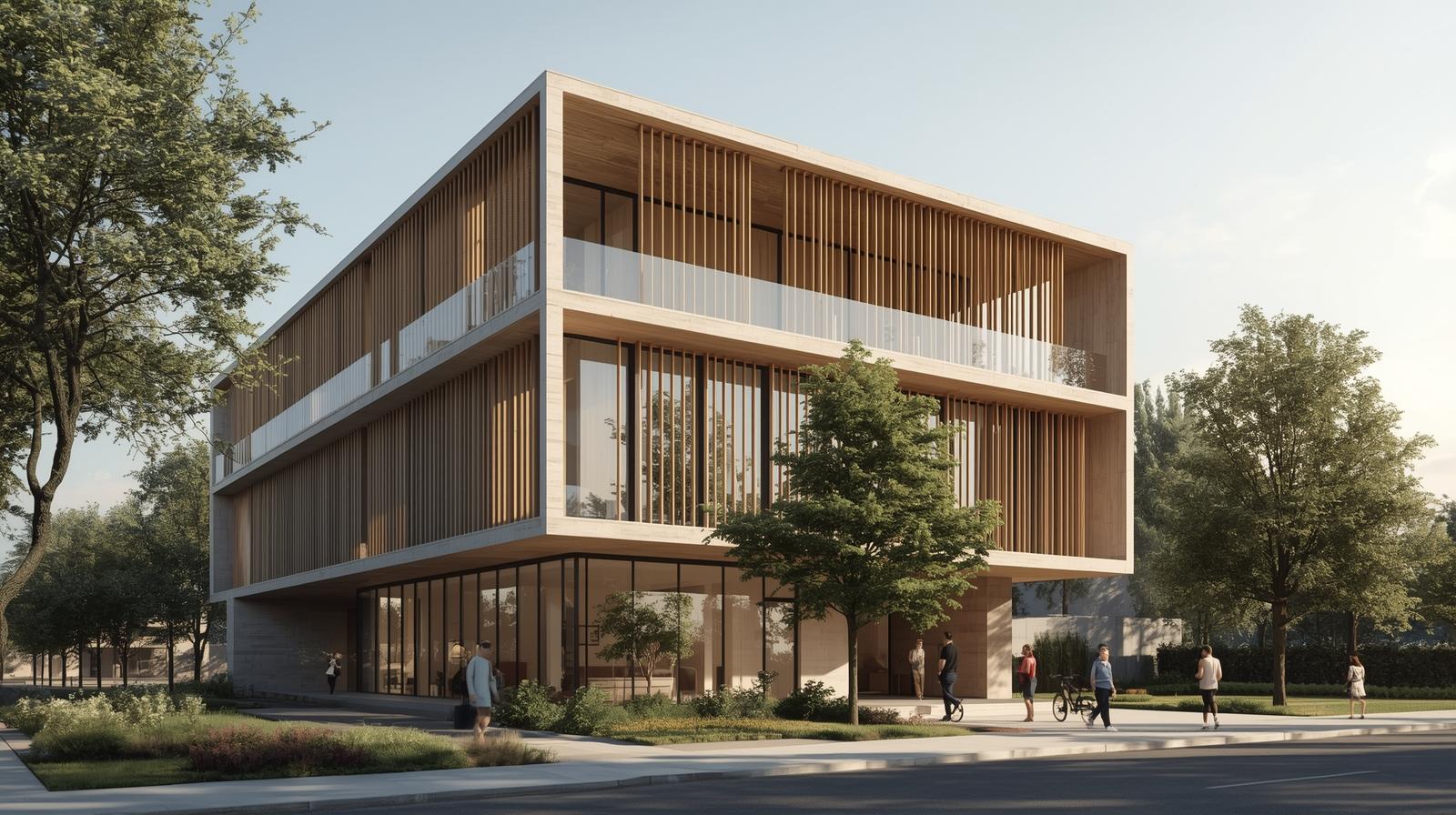
As the global construction industry evolves, Net-Zero Buildings stand at the center of sustainable development. These innovative structures are designed to generate as much energy as they consume annually, resulting in a neutral carbon footprint. With growing climate concerns, stricter building codes, and the need for long-term cost efficiency, net-zero construction is rapidly becoming the gold standard across the United States.
This article explores what makes a building net-zero, how it achieves energy balance, its core benefits, challenges, and the technological innovations driving its adoption.
What Is a Net-Zero Building?
A Net-Zero Building (also called a Zero Energy Building or ZEB) is a structure that balances its energy use by producing an equivalent amount of renewable energy on-site or through local clean energy sources. In simple terms, the building’s annual energy consumption equals the energy it generates.
The concept applies to all sectors — residential, commercial, and institutional. From schools and hospitals to office towers and homes, the goal is the same: achieve complete energy neutrality without compromising comfort or performance.
Core Principles of Net-Zero Design
1. Energy Efficiency Comes First
The foundation of a net-zero building lies in minimizing energy demand. This means optimizing the design and systems before adding renewable energy solutions. Key measures include:
- Advanced insulation and airtightness
- Energy-efficient windows and glazing
- LED lighting and automated controls
- Smart HVAC systems
- Heat recovery ventilation
2. Renewable Energy Generation
Once the building’s energy use is minimized, renewable energy sources—primarily solar PV systems, wind turbines, or geothermal systems—are integrated to meet the remaining energy demand.
3. Energy Storage and Grid Interaction
Net-zero buildings often include battery storage systems to balance generation and consumption, especially during night hours or cloudy days. When producing excess energy, they may feed it back into the power grid, contributing to community energy sustainability.
4. Smart Energy Management
Modern net-zero buildings employ smart meters and building management systems (BMS) that track real-time energy performance, optimize appliance use, and alert occupants to inefficiencies.
Why Net-Zero Buildings Matter
Addressing Climate Change
Buildings are responsible for a major share of greenhouse gas emissions in the U.S. By transitioning to net-zero designs, the industry can significantly cut CO₂ output and help achieve national decarbonization goals by 2050.
Reducing Energy Costs
Although the upfront investment for net-zero construction can be higher, the lifetime operational costs are drastically lower. These buildings often see energy savings of 50–80% compared to conventional designs.
Enhancing Resilience and Independence
With renewable systems and on-site power generation, net-zero buildings are less vulnerable to grid disruptions or fluctuating energy prices. This self-reliance enhances resilience, especially in areas prone to power outages.
Regulatory and Market Advantages
Government incentives, tax credits, and certifications like LEED Zero Energy or International Living Future Institute’s Zero Energy Certification make net-zero construction both economically and reputationally rewarding.
Design Strategies for Net-Zero Buildings
1. Site Orientation and Passive Design
The building’s orientation is critical for maximizing solar gain and natural ventilation. Passive heating, cooling, and daylighting significantly reduce mechanical system dependency.
2. Advanced Building Envelope
High-performance insulation materials, airtight construction, and reflective roofs are essential to minimizing heat transfer and improving thermal stability.
3. High-Efficiency Equipment and Appliances
Energy-efficient HVAC, lighting, and appliances are selected to minimize demand while maintaining user comfort.
4. Renewable Integration and Smart Control
Solar panels, micro-wind systems, and smart energy storage ensure an ongoing balance between generation and usage. Automated systems manage energy flows seamlessly.
5. Water and Waste Efficiency
Net-zero design often extends beyond energy to water and waste systems—using rainwater harvesting, greywater recycling, and waste-to-energy processes.
The Economics of Net-Zero Construction
Upfront Costs vs. Long-Term Returns
Net-zero buildings typically cost 5–10% more to construct initially due to advanced materials and systems. However, this premium is offset by energy savings within 5–8 years.
Incentives and Financial Support
Many U.S. states offer renewable energy rebates, low-interest loans, and tax deductions to encourage net-zero adoption. Programs such as the Inflation Reduction Act (IRA) and Energy Efficient Commercial Building Deduction (179D) provide strong financial motivation for contractors and developers.
Increased Market Value
As awareness grows, net-zero buildings command higher resale values and rental demand, making them highly profitable investments.
Challenges in Achieving Net-Zero
1. Technical Complexity
Integrating renewable systems and achieving airtightness requires skilled professionals, advanced simulation tools, and careful commissioning.
2. Regional Climate Variability
Energy demand and solar potential vary across regions. For instance, buildings in the Northeast face heating challenges, while those in the Southwest must manage solar overexposure.
3. Upfront Financial Barriers
Smaller builders or homeowners may find the initial cost prohibitive without government support or financing options.
4. Operational Awareness
Net-zero performance depends on occupant behavior—efficient use of lighting, appliances, and HVAC systems remains essential to maintaining energy balance.
Case Studies and Real-World Success
- Bullitt Center, Seattle – Known as the “Greenest Commercial Building in the World,” it generates more energy than it consumes through solar and rainwater systems.
- National Renewable Energy Laboratory (NREL) Building, Colorado – A federal facility that serves as a model for large-scale net-zero office design.
- Kailua Net-Zero Home, Hawaii – A residential project that achieves full energy balance through passive cooling and rooftop solar integration.
These examples highlight how net-zero designs are scalable across building types and climates.
Future Outlook: The Road to Net-Zero Communities
The future of net-zero construction is expanding from individual buildings to entire neighborhoods and cities. Developers are planning net-zero communities where shared energy systems, microgrids, and sustainable transit options contribute to full carbon neutrality.
Advancements in AI-based predictive energy management, next-gen solar panels, and modular prefabrication are making net-zero construction faster, cheaper, and more efficient.
By 2035, analysts project that a significant portion of new U.S. commercial and residential developments will target net-zero certification as standard practice.
Conclusion
Net-zero buildings are not just a sustainability milestone—they are the foundation of future construction. Their balance of environmental responsibility, operational efficiency, and long-term value positions them as the most intelligent investment in modern real estate.
For contractors, architects, and developers, embracing net-zero principles means aligning with the direction the construction industry is inevitably heading: a carbon-neutral, cost-effective, and sustainable built environment.
Last fact-checked and editorially reviewed on November 02, 2025 .
How we created & reviewed this content:
The content in this article has been gone through our editorial process and currently reliable.
DISCLAIMER
Profound Estimates besides its services, also provides independent, fact-checked information about construction estimates and material takeoffs for general reference only and images on this site maybe AI-Assisted where appropriate and relevant. See our Disclaimer for details.
INFORMATION SOURCES
Profound Estimates follows strict sourcing standards, relying only on credible, verifiable data from manufacturers, industry benchmarks, and reputable publications. Learn more about how we ensure content accuracy and transparency in our Editorial Policy.
- U.S. Department of Energy – Office of Energy Efficiency & Renewable Energy
- National Renewable Energy Laboratory (NREL) – Zero Energy Buildings Database
- U.S. Green Building Council – LEED Zero Energy Certification
- Environmental Protection Agency (EPA) – Sustainable Building Guidelines
- International Living Future Institute – Zero Energy Certification Program
- ASHRAE – Advanced Energy Design Guidelines
- American Institute of Architects (AIA) – 2030 Commitment Reports
- Building Performance Institute – Energy Efficiency Standards
- Construction Industry Institute – Green Design Practices
- Smart Buildings Alliance – Net-Zero Infrastructure Reports
- Journal of Sustainable Architecture and Engineering
- U.S. Energy Information Administration – Building Energy Data
EDITORIAL HISTORY
Our team of writers, editors, and reviewers continually monitors the mobile industry and updates articles when new information becomes available. See how we maintain transparency and editorial integrity in our Editorial Policy.
- Current version
- Edited by Rachel Nguyen
- November 02, 2025
- Written by Daniel Morales
- Edited by Rachel Nguyen
- Editorially reviewed by Kevin O’Donnell & Amanda Ruiz
DISCUSSION & FEEDBACK
We value reader insights and industry feedback to help us keep our content accurate and relevant. Learn how we handle reviews, corrections, and updates in our Editorial Policy.
- Leave a feedback on this post update at Reddit and Youtube.
CITE & SHARE IT
You’re welcome to cite and share profound estimates content for reference with proper attribution and a link back to the original article — helping more readers access trustworthy, well-researched construction information.