
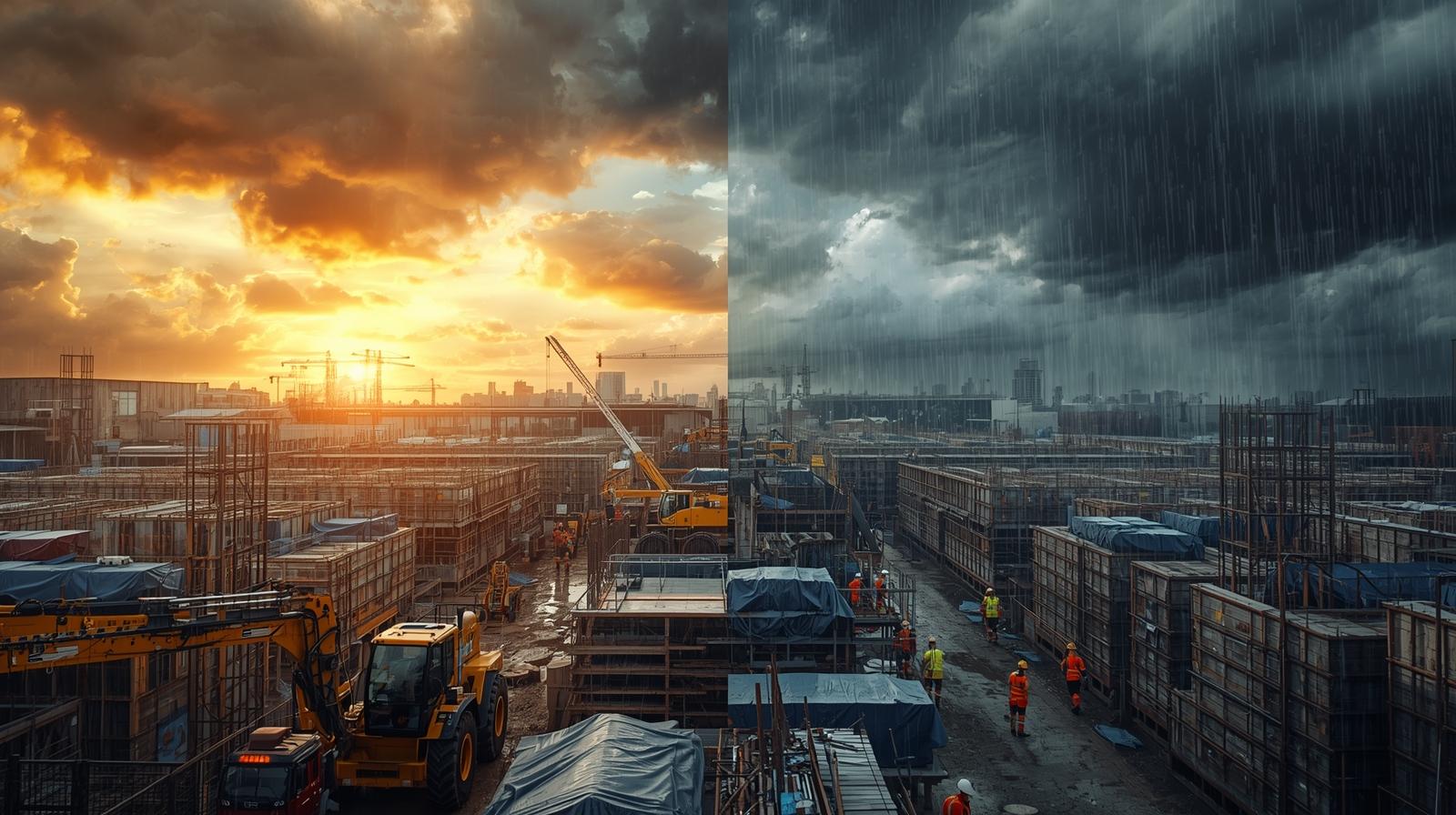
Weather plays a bigger role in construction cost estimation than most people realize. From heat waves and snowstorms to humidity and rainfall, climate directly affects productivity, scheduling, equipment efficiency, and even material performance.
A well-prepared estimator must account for seasonal fluctuations and local climate patterns to create realistic and competitive bids. Ignoring weather impact can lead to costly overruns, missed deadlines, and underestimated risks.
1. The Link Between Weather and Construction Costs
Every phase of construction — from excavation to finishing — depends on environmental conditions. Adverse weather doesn’t just slow progress; it can change how work is done and how much it costs.
Key cost impacts include:
- Delays in labor productivity due to unsafe or harsh conditions.
- Equipment downtime from rain, snow, or extreme temperatures.
- Material damage or waste, especially with concrete, asphalt, and paints.
- Increased temporary protection costs such as tarps, heaters, or dehumidifiers.
- Extended general conditions costs, as site overhead and supervision continue during delays.
A good estimator anticipates these effects by applying seasonal adjustment factors and weather contingency allowances.
2. Regional Climate Differences Across the U.S.
Estimating accuracy improves when you consider the climate zone of the project location:
| Region | Typical Weather Impact | Estimating Focus |
|---|---|---|
| Northeast | Snow, ice, freezing rain | Heating, delays, snow removal |
| Southeast | Humidity, hurricanes | Moisture control, insurance |
| Midwest | Variable temperatures | Concrete curing, equipment efficiency |
| Southwest | Heat, drought | Cooling, hydration, dust control |
| West Coast | Mild but seismic | Scheduling flexibility, air quality |
Using local climate data or weather-adjusted cost indices (like RSMeans regional modifiers) helps refine estimates to match real-world site conditions.
3. Effects on Labor Productivity
Labor is among the most sensitive cost components when weather turns extreme.
Cold Weather:
- Workers must wear heavy gear, slowing movement.
- Tasks like concrete placement or masonry require heating solutions.
- Average productivity drop: 10–30% in freezing conditions.
Hot Weather:
- Heat exhaustion risk leads to shorter shifts and more breaks.
- Paving, roofing, and framing become hazardous under high temperatures.
- Productivity loss: 15–25% during heat waves.
Rain and Humidity:
- Affects electrical, drywall, and paint jobs significantly.
- Triggers delays and potential rework due to water damage.
Estimators should factor in weather allowances in labor hours — for instance, 5–10% contingency for projects running through winter or rainy seasons.
4. Material Performance and Handling Costs
Certain materials react poorly to weather, increasing both direct and indirect costs.
- Concrete can’t cure properly in freezing conditions without heating blankets or admixtures.
- Paints and coatings need dry, moderate weather for adherence.
- Asphalt loses workability in cold temperatures.
- Steel may rust quickly in coastal or humid environments, requiring additional coatings or storage protection.
Estimators should include:
- Material protection measures (plastic sheets, heating tents, covered storage).
- Replacement cost allowance for weather-damaged supplies.
- Extended delivery timelines for temperature-sensitive items.
5. Scheduling Implications
Construction timelines often extend due to weather interruptions, especially on outdoor-heavy projects such as roadwork, framing, or roofing.
Delays trigger additional costs including:
- Extended equipment rentals.
- Labor standby time.
- Increased supervision costs.
- Temporary facility rentals (trailers, lighting, heating).
A proactive estimator integrates weather-adjusted schedules using tools like Monte Carlo simulation or historical weather models to test how likely certain delays are — and how to price them in.
6. Risk Management and Contingency Planning
Weather risks are unavoidable, but they can be managed. Smart estimators use a three-layered contingency approach:
- Time Buffer: Add float days in project scheduling to account for possible weather-related delays.
- Cost Buffer: Allocate 3–7% of the project budget for weather contingencies.
- Insurance Coverage: Consider weather-related builder’s risk or delay insurance for large-scale or seasonal projects.
Tracking local weather patterns from previous years also improves risk prediction. For instance, if rainfall averages 15 days per month during construction season, assume at least half of those days will partially impact productivity.
7. Technology’s Role in Weather-Aware Estimating
Modern estimators are increasingly using AI-driven forecasting tools and construction management software that integrate real-time weather data.
These tools help:
- Predict delay probabilities.
- Adjust cost forecasts automatically.
- Visualize alternative timelines based on seasonal changes.
- Generate automatic alerts for temperature-sensitive activities.
For example, AI-based estimating systems can reallocate resources in simulation models — showing how shifting roofing or paving to a different month could save labor costs.
8. Realistic Example: Estimating a Midwestern Residential Project
Imagine you’re estimating a 1,800 sq. ft. residential project in Chicago scheduled from December to March.
Here’s how weather impacts would translate:
| Cost Component | Adjustment Factor | Notes |
|---|---|---|
| Labor Productivity | -25% | Frozen ground and heavy clothing reduce efficiency |
| Concrete Work | +10% | Heating and additives required |
| Temporary Heat | +5% | Propane and equipment rentals |
| Schedule Delay | +15 days | Weather downtime expected |
| Contingency | +7% | To cover unknown weather-related costs |
By proactively including these adjustments, you keep your estimate accurate and avoid surprises during execution.
9. Long-Term Lessons for Accurate Estimating
- Always review historical weather data before finalizing estimates.
- Apply seasonal multipliers to both labor and equipment rates.
- Never assume “average weather” — it’s rarely average during construction.
- Factor in site-specific risks like flooding, snow removal, or dust storms.
- Document weather assumptions in your estimate notes for transparency.
Conclusion
Weather is one of the most underestimated cost drivers in construction. Whether it’s summer heat, winter frost, or unexpected storms, these conditions directly affect your project’s schedule, labor performance, and budget accuracy.
The best estimators don’t just react to weather — they plan for it. By incorporating regional data, seasonal adjustments, and technology-driven forecasts, your estimates become not just more competitive, but also more realistic and reliable.